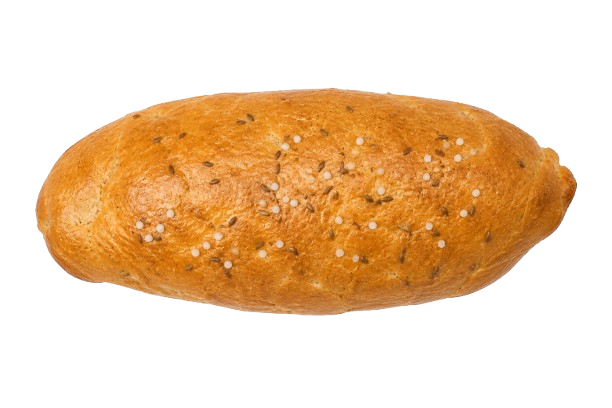
The Briegel is a regional bread specialty from the Ostalbkreis in Baden-Württemberg, with Schwäbisch Gmünd claiming to be its “Stammland” (homeland). Legend, as recorded by Mögglingen’s former mayor Ottmar Schweizer, traces it to the late 13th century, when monks at Schwäbisch Gmünd’s Dominican monastery, enduring a strict 40-day fast, secretly baked bread from flour they’d found. They added too much water, so the dough spread into misshapen lumps; salt and caraway got scattered on top because the bread was already in the oven. When the abbot caught them, he cursed the “grobschlächtige Briegel” (“crude cudgels”) — and the name stuck. “Briegel” is Swabian for “Knüppel” (club/cudgel), a nod to the bread’s knobbly, irregular shape. It likely spread through fasting traditions in Catholic areas.
Briegel
Stuttgart
A knobbly, crackly-crusted bread from the Swabian Ostalb — born, so the legend goes, from monks breaking their fast. Naturally vegan, best eaten fresh from the bakery.
History
Ingredients
How to order
Einen Briegel, bitte.
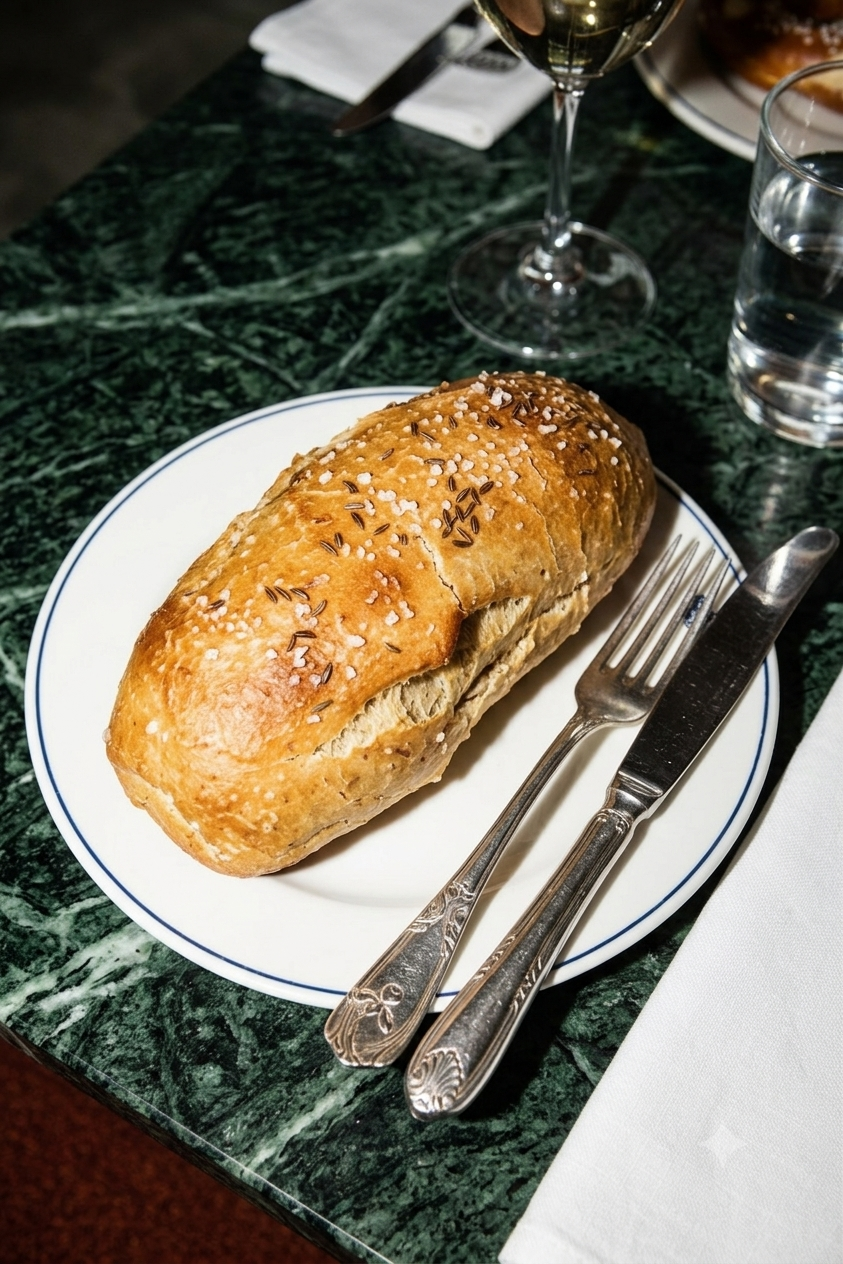
You order it fresh at the bakery counter — point or ask for a Briegel by name. It comes plain, or "belegt" (topped) if the bakery offers it. Since the plain Briegel is vegan as it comes, you don’t need to ask about hidden animal ingredients. Traditionally it’s eaten with hearty toppings.
We suggest: take it plain and split it warm with a little plant-based butter, or fill it at home with hummus, a plant-based cold cut or cheese, and something crunchy like pickles or fresh tomato. Simplest of all — eat it fresh from the bag while the crust still cracks, the way locals do.
Where to get it
It’s widely available in bakeries across the Ostalbkreis, especially in Schwäbisch Gmünd.
Related dishes